
Private Agent Studio
Vercel for private AI agents on 0G.
Videos
Tech Stack
Description
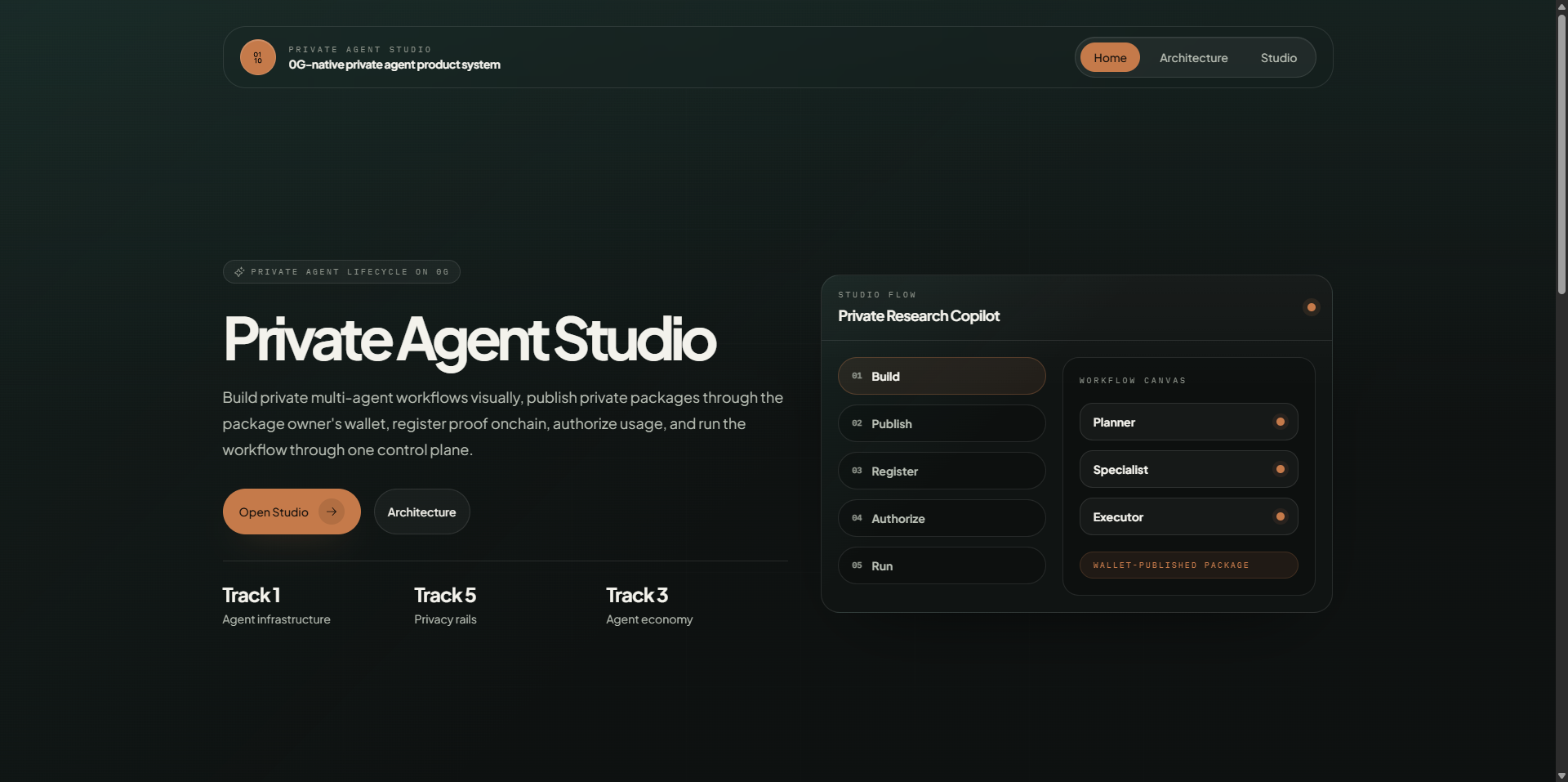
Private Agent Studio is a 0G-native agent builder for teams that need privacy, ownership, and controlled runtime access around their AI workflows. Most agent builders stop at prompt configuration. They let a user test an agent, but they do not answer who owns it, where its package lives, who can run it, or how another runtime can consume it without bypassing policy. Private Agent Studio solves that lifecycle.
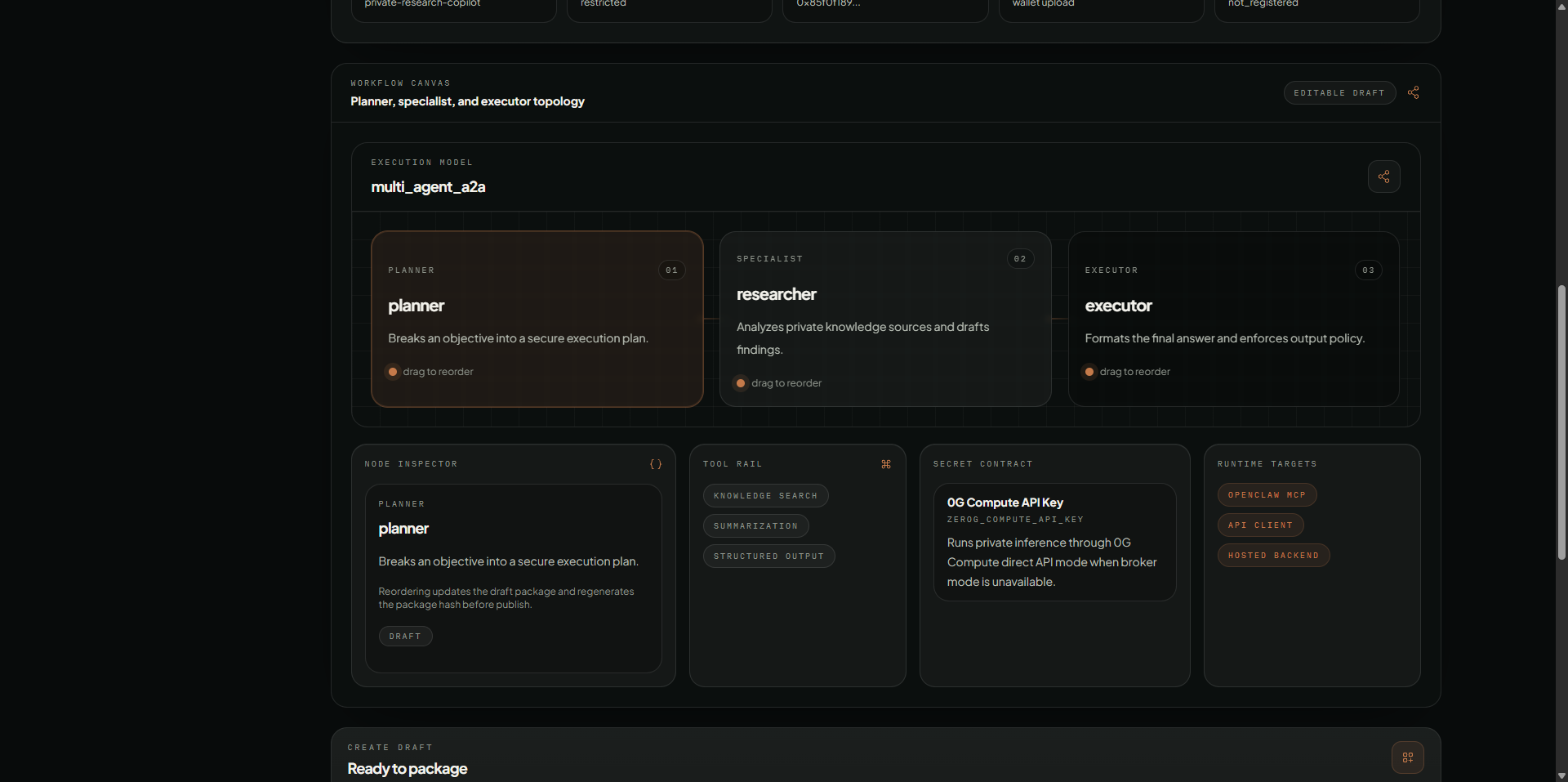
The product gives a user a guided workspace to create a private multi-agent workflow, publish the package to 0G Storage, register ownership and package roots on 0G Chain, authorize scoped usage, run the workflow through 0G Private Computer, and export the agent as a ready-made MCP endpoint. A created agent becomes more than an internal draft. It becomes a portable private agent asset with proof, permissions, and runtime access.
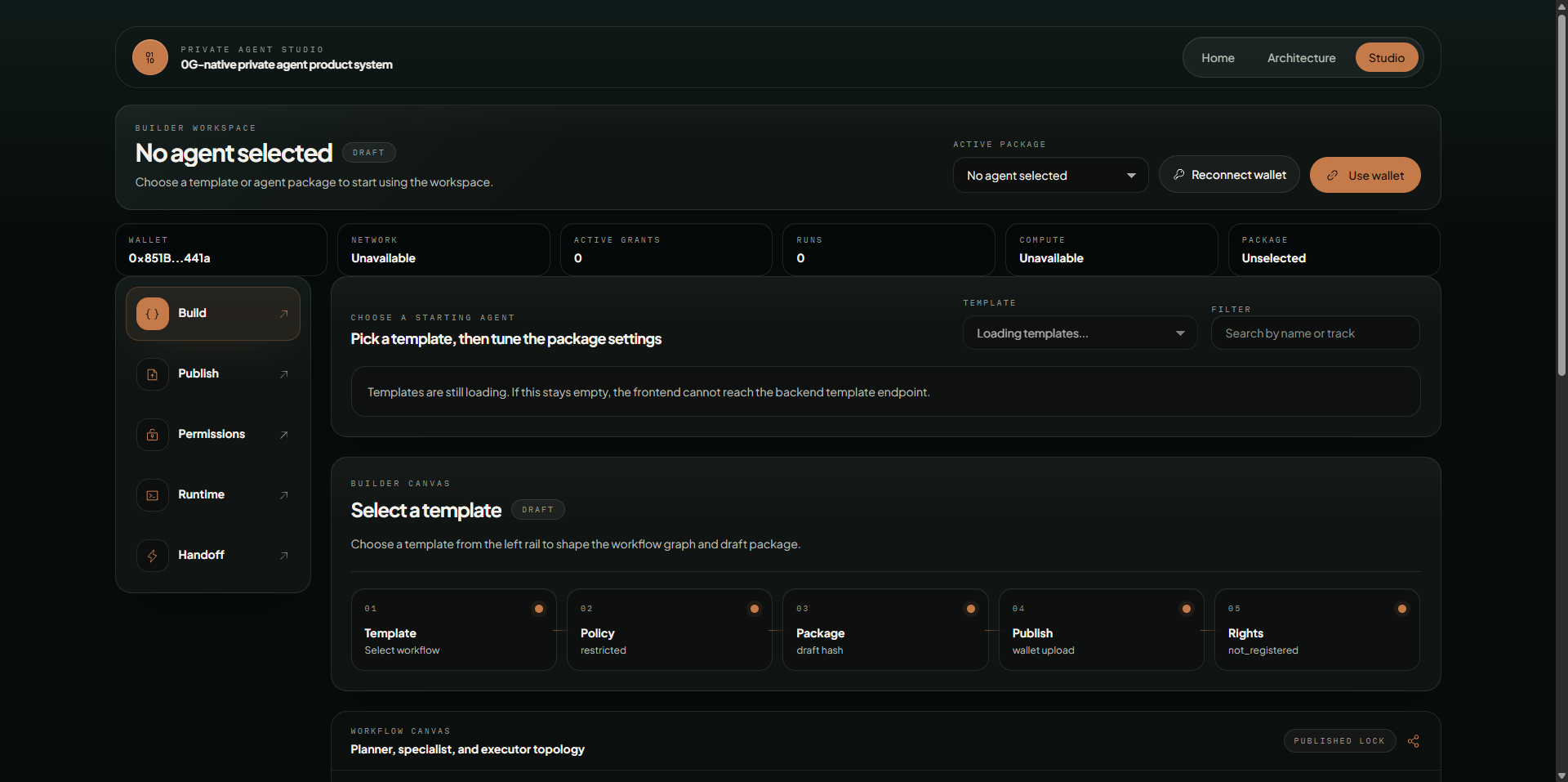
The current Studio flow is organized into five product stages:
Build: choose a private agent template and shape the workflow.
Publish: store the agent package on 0G Storage and capture the storage root.
Register: anchor ownership, package hash, storage root, policy hash, and workflow hash on 0G mainnet.
Permissions: grant scoped usage rights to another wallet, app, or runtime.
Runtime and Handoff: run the agent through 0G Private Computer and expose it as hosted API or MCP tools.
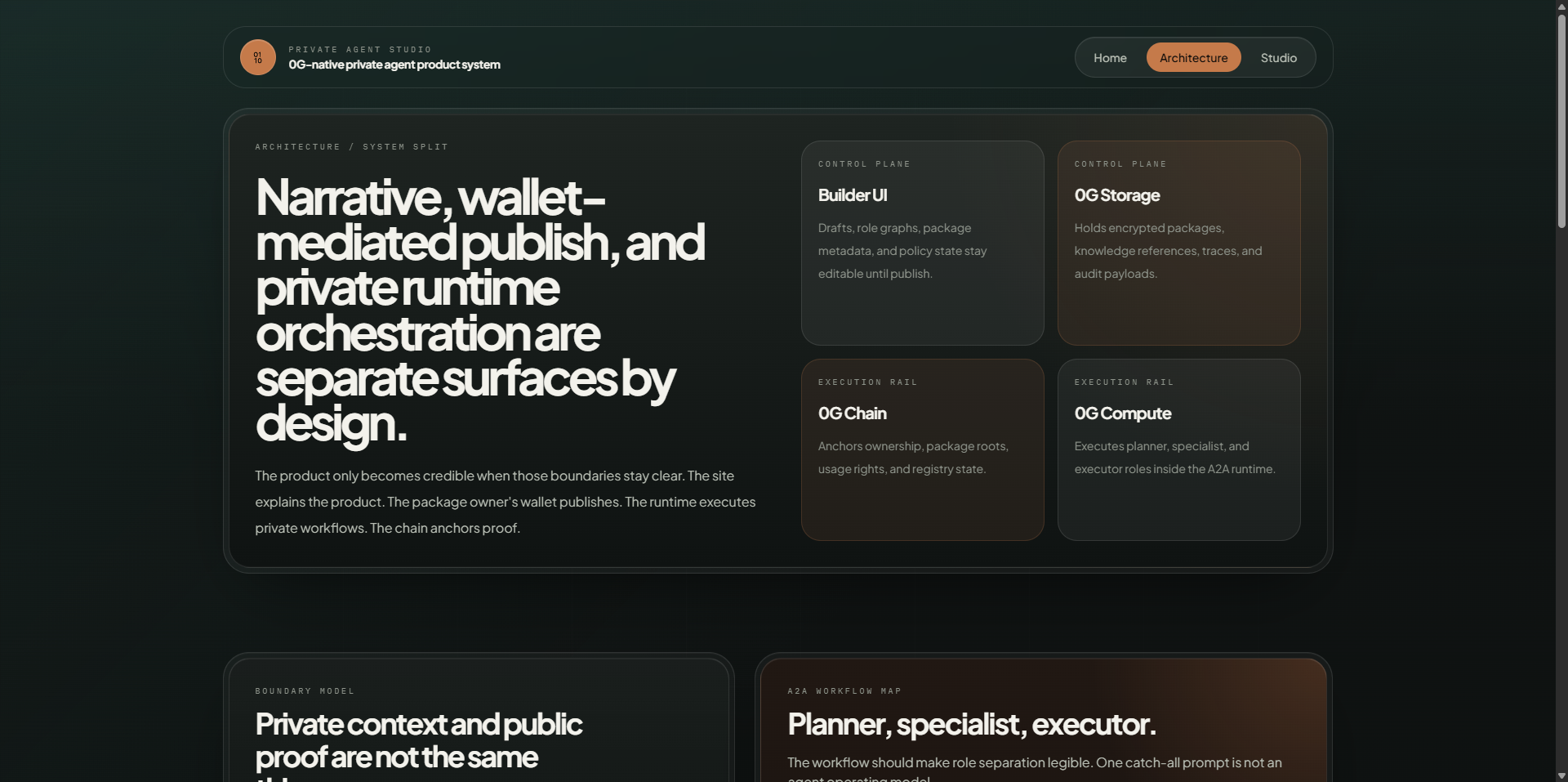
Private Agent Studio uses 0G as the product backbone: -
0G Storage stores published agent packages, run traces, audit artifacts, and encrypted Studio state snapshots.
0G Chain stores registry records for ownership, package roots, usage grants, and the latest encrypted state pointer.
0G Private Computer executes the workflow through TEE-oriented inference.
0G Router API provides the OpenAI-compatible production model endpoint.
The product also solves a practical deployment problem. Cloud Run containers are ephemeral, so Studio state is encrypted, uploaded to 0G Storage, and recovered through a chain-anchored state pointer. This means a new backend revision can recover the created agent state from 0G instead of losing it. For external usage, each created agent exposes an agent-specific MCP server over Streamable HTTP using the official MCP TypeScript SDK.