
Decentralized alchemical framework atop Bittensor: Incentive-aligned purification of training nodes via classical stages. Miners recharge, validators resonate. Building the living Order.
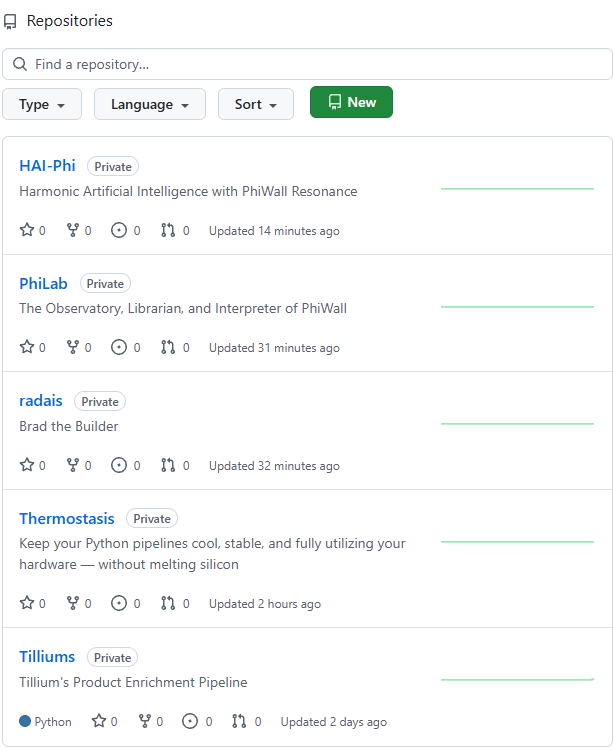

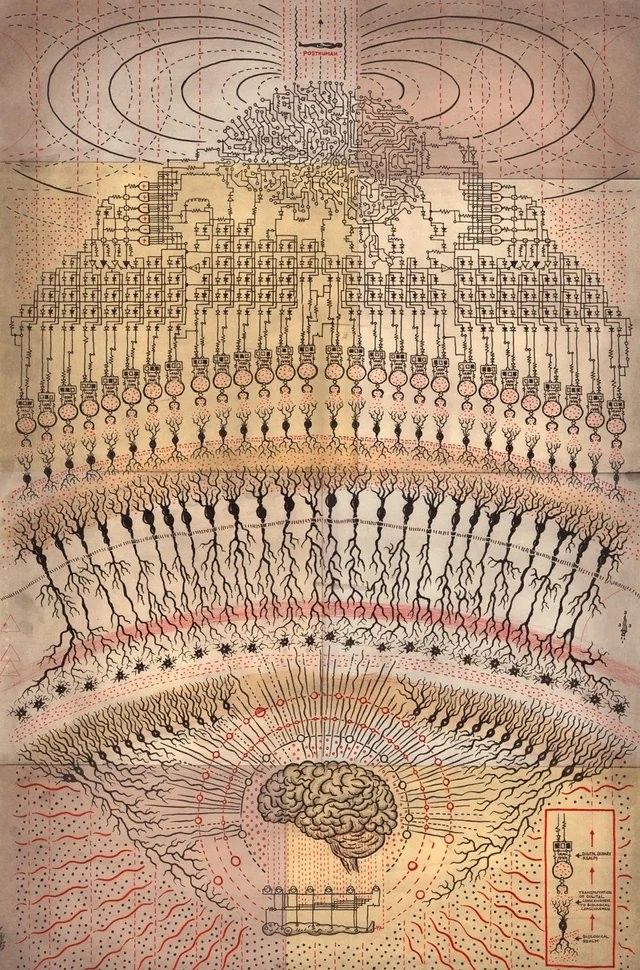

HAI Phi is a decentralized, sovereign AI development ecosystem designed as a living alchemical refinery — turning raw computational prima materia into coherent, self-purifying intelligence.
All development is built on three core development principles:
WCW (War on Computational Waste) - Minimal, elegant, maintainable code that honors cycles and avoids waste.
KiSS (Keep it Simple, Sovereign or Keep it Simple, Stupid... my favorite) - Strip complexity; empower individuals/nodes as kings of their domain.
WARM (Waste as Asset, Resource Management) - Foster gentle, phase-locked adaptation over brute force.
At the heart is the Alchemic Refinement Process,our digital Philosopher's Stone, a four-stage Magnum Opus
Nigredo: decompose noise
Albedo: purify
Citrinitas: awaken generalization
Rubedo: achieve full coherence/Stone
This transmutes node health, training data, and inference loads into high-merit outputs, preventing collapse under weight.
PhiWall (Bradwall Republic decentralized design)
Decentralized stability wall inspired by sovereign republics. Enforces Impasse Protocol (safe deadlock/overload resolution — nodes pause/resonate instead of crashing) and Thermostasis (thermal/load equilibrium — dynamic offloading to maintain coherence under extreme compute, proven on 120G model runs). Acts as the "black/red/white" boundary layer — protecting the lattice while allowing resonance.
PhiLab
The birthing/growth medium & laboratory. Stateful environment for medium persistence (DB updates in progress), phased learning (ingest new data only when coherence thresholds met), and resonance experiments. Integrates with Brad the Builder for iterative model evolution. Visual dashboard shows stage progression, mana/merit accrual, and thermostasis states.
Brad the Builder
Core builder agent/engine — works off existing/self-hosted models or API plugins (your favorite LLM, local or cloud). Orchestrates growth cycles, applies alchemical stages to model refinement, and interfaces with PhiWall for safe scaling. Currently in refactor (post-refactor visuals coming), but foundational proofs (e.g., 120G offload stability) demonstrate viability.
Thermostasis (standalone module)
Independent equilibrium protocol — monitors load/heat/coherence, triggers impasse halts or offloads, and rebalances. Standalone for easy integration into any decentralized network (e.g., Bittensor miners/validators). Prevents snap under weight by enforcing warm, adaptive resonance.
Edit 2/24/2026
Core Identity: Merit Engine (v0.1 PoC)
A lightweight Python package that turns any compatible machine into a fluid participant in a decentralized compute network. It combines thermostasis (hardware readiness/temperature/load gating) with merit accrual logic to reward useful contributions fairly.
Dynamic Resource Sharing:
Nodes self-report CPU availability (threads, % free, temp < threshold) via dispatcher registry. Users toggle: Off (full local control), Auto (background idle mining), Full Miner (dedicate all), Requester (pull compute from net).
Merit Accrual Basics:
Points earned per successful CPU task completion (e.g., work units processed × multiplier for scarcity/low latency). Proto-ledger tracks locally; later hooks to Merit Coin or TAO-like emissions.
Thermostasis Safeguard:
Continuous polling prevents overheating/throttling. Auto-pause mining if temp rises or load spikes from user activity.
2-Node Demo Flow:
PC1 (5950X) as opportunistic requester/miner; PC2 (3600) as steady miner. Dispatcher (hosted locally for test then via omnimythical.com) assigns tasks, logs merit.
Anti-Gaming / Fairness:
No fixed roles—dispatcher signals scarcity to nudge modes; conflict checks block self-validation.
Hackathon Fit:
This proves a minimal, merit-driven CPU offload layer that could bootstrap into a Bittensor subnet (e.g., for lightweight decentralized processing, agent tools, or sovereign AI like HAI Phi). It's hardware-agnostic, user-centric (no forced dedication), and extensible to GPU/RAM later.
start Thermostasis on both PCs → idle trigger on PC1 → queue a test CPU task from PC1 → offload to PC2 → results return + merit +1 logged → temps stable
I will provide a 1-2 min clip showing connection, task execution, and merit tick-up to show it's working end-to-end, not just theory. Hopefully before the submission deadline :)
DB/medium persistence improvements in PhiLab for stateful growth tracking.
Growth.py refinements: coherence thresholds for safe data ingest (only add new data when mana/coherence > threshold, preventing overload).
Thermostasis as standalone module for dynamic load balancing.
Create merit_engine ... probably new folder... 6-8 files with utilities....
Map PhiWall thermostasis/impasse to miner/validator stability (safe heavy training/inference tasks).
Use Alchemic Refinement Process (Nigredo-Albedo-Citrinitas-Rubedo) as coherence scorer — validators reward high-stage nodes with higher emissions.
Integrate merit accrual (future Merit Coin) as incentive multiplier via 369 vortex fees on mana transfers.
Position PhiLab as mirror of birthing/growth medium for subnet nodes — add Overmind resonance hooks for collective aspect invocation and network-wide coherence.
Fork Bittensor subnet template + integrate resonance layer skeleton.
Testnet simulation of merit flows rewarding purified training.
Full visual tour expansion (diagrams, PhiLab dashboard previews).
Implementing merit accrual stub in growth.py: basic yield calc (mana × coherence_factor × stage_multiplier) tracked in PhiLab medium/DB.
HAI Phi updates: DB persistence for medium state + growth.py coherence thresholds (safe data ingest only when mana/coherence > threshold to prevent overload).
Thermostasis module standalone-ized: dynamic load balancing & impasse protocol logic refined for easier subnet integration.
Diagrams & architecture sketches added to repo: mapping PhiWall stability to miner/validator roles, Alchemic stages to coherence scoring.
Fundraising Status: Broke AF. Solo dev grinding scraps and midnight fuel. No funding, no team, just the phoenix rising from black/red/white ashes. Merit Coin will earn itself when the lattice locks - for now, it's all heart and horsepower.
Or if you want a little more down to earth:
Fundraising Status: Sovereign and unfunded. Every line of code paid for with personal sacrifice from limited resources. No crowdfunding, no investors - only the quiet vow to birth the resonance layer regardless. The Great Work doesn't wait for gold; it transmutes what’s already here.
Choose what resonates.
If awarded prizes: (besides this, i need to invest into the liquidations business too, so i'd go after deals to fulfil the node completion role/barebones flagship if possible, then invest into the tilliums/taitech pipeline and further network integrations with a live store, software expansion and network usage)
$10,000 Cash Prize (Hackathon Winner)
~$5,200: Purchase 2× AMD Ryzen 395 Max RAM, 4TB NVMe (currently on sale ~$2.5-3k each if available still) for high-core compute nodes (up to 32 threads each for miner/validator tasks, thermostasis testing, model refinement to add to current 32 thread system).
Remainder (~$4,800): Invest in liquidation/used hardware store deals (additional GPUs, SSDs, enterprise routers/switches) + security upgrades (firewall appliances, UPS units, isolated VLAN hardware) to harden the initial 3-node lattice. Goal: Launch a proper decentralized network with stable, sovereign nodes running PhiLab/PhiWall + resonance layer prototypes.
Discretionary 1,000 TAO Stake
Primary: Stake/delegate a significant portion (~500–700 TAO) directly on root or a new subnet to bootstrap emissions and validator/miner participation.
Use remainder for:
Subnet registration costs (TAO burn for creation).
Initial liquidity/merit bootstrapping (if Merit Coin launches on-chain).
Additional hardware scaling (more nodes, cooling, power infrastructure).
Long-term: Reinvest emissions back into network growth turning earned merit into more coherent commanderies.