
RamiBot is a local-first AI assistant for security operations, connecting LLM reasoning with real cybersecurity tools, MCP execution, Docker environments, approval gates, and evidence-locked reporting
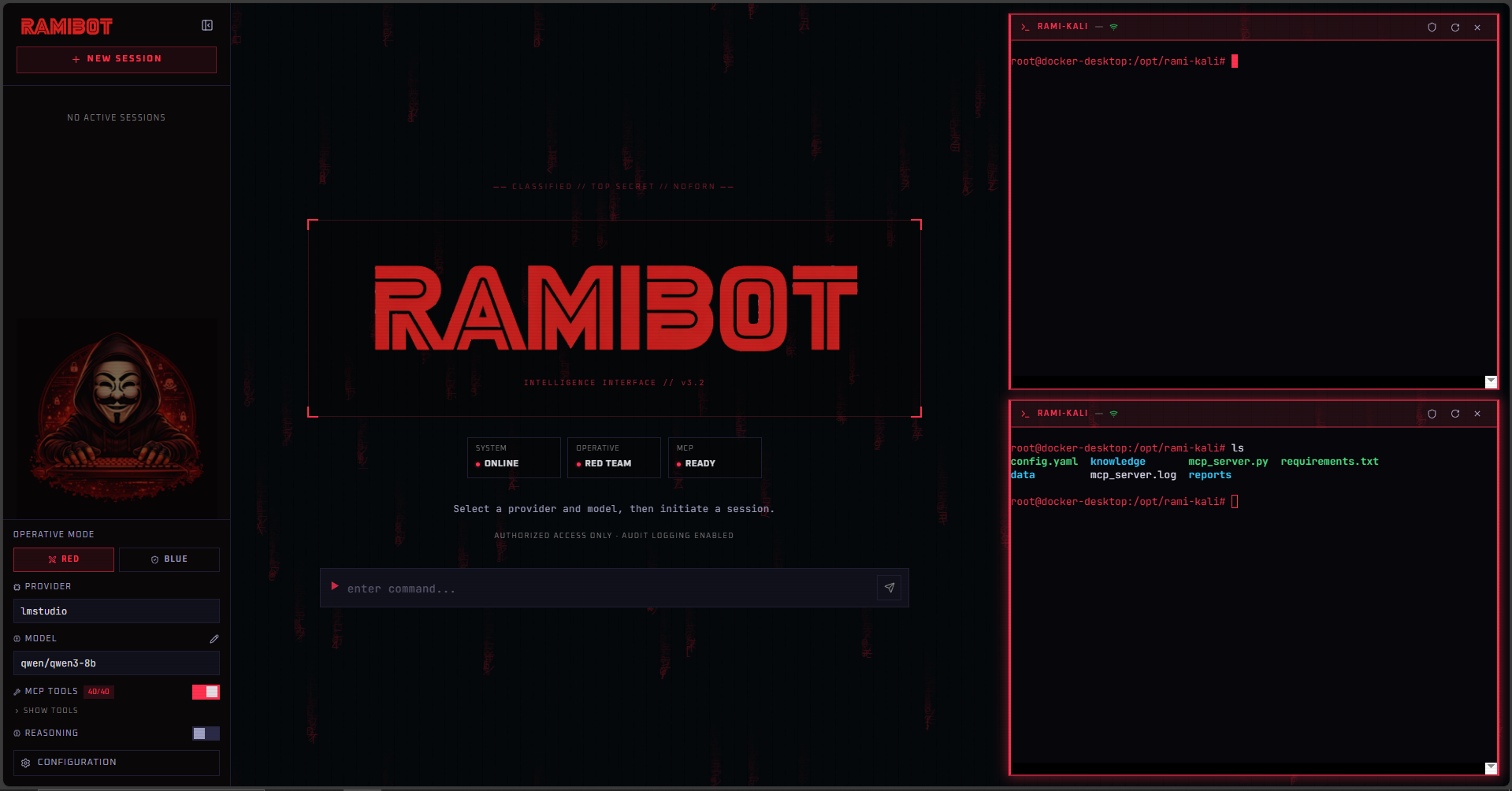
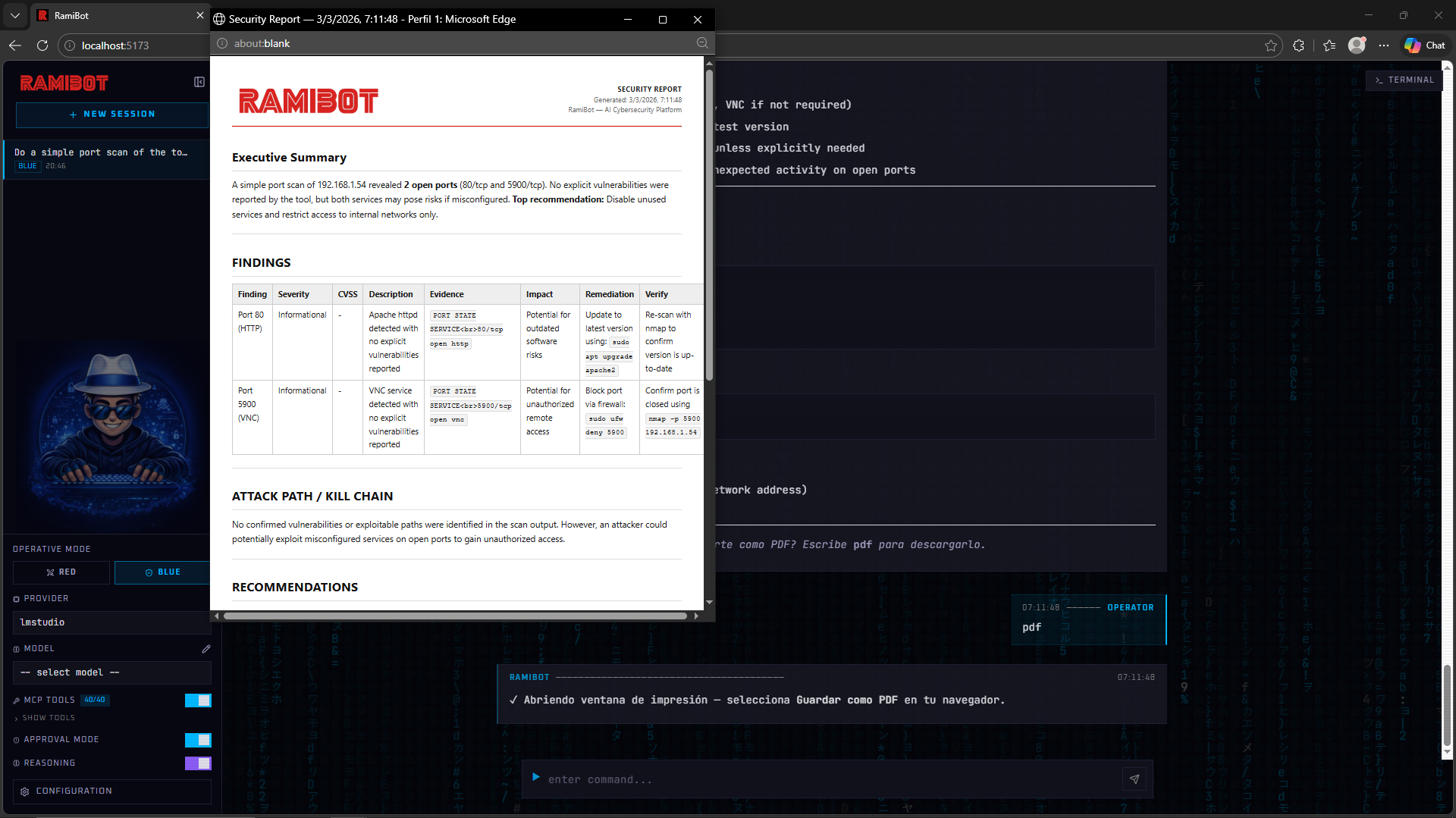
It supports multiple LLM providers, MCP tool execution, Docker-based terminal access, Burp Suite assessment workflows, Tor/proxy management, persistent findings storage, and one-click PDF report generation.
Unlike a generic chatbot, RamiBot is designed for safe AI-assisted security work. Its Tool Approval Gate requires human approval before executing security tools, while its Evidence-Locked Reporting system prevents hallucinated CVEs, versions, severity ratings, or unsupported findings.
Key Features
AI & Reasoning
Multi-provider LLM support: OpenAI, Anthropic, OpenRouter, LM Studio, and Ollama
Skill Pipeline: structured methodology for Recon → Exploit → Defense → Reporting
Evidence-Locked Reporting: prevents hallucinated CVEs, versions, findings, or unsupported security claims
Security Tool Integration
Real security tool execution via MCP
Rami-Kali MCP server with 45+ pentesting tools available to the LLM
Dedicated Burp Suite web assessment workflow
Infrastructure & Safety
Docker-integrated terminal for controlled command execution
Tool Approval Gate requiring human approval before security tool execution
Tor and proxychains4 routing with ready-made Burp and Tor profiles
Persistent findings database
One-click PDF report export
One-command install and start scripts for fast local setup
During the hackathon, the focus has been on refining RamiBot’s security operations workflow rather than pushing major repository changes. Work has centered on improving the structure of the skill flows, reviewing how each security skill should guide the user through recon, exploitation analysis, defense recommendations, and reporting, and planning new specialized skills for future versions.
Another active area has been improving the design of AI subscription connectivity through WebAuth-based access, so users can connect supported AI providers in a safer and more user-controlled way. The current progress is mainly architectural and workflow-focused, preparing RamiBot for cleaner execution flows, better skill separation, and more reliable provider integration.
No external funding has been raised yet. RamiBot is currently self-funded and independently developed.