
Verifiable price certificates for graded cards, with a small NFT-backed USDG lending pilot on Robinhood Chain. Asking-price evidence is separate from physical authenticity and custody.
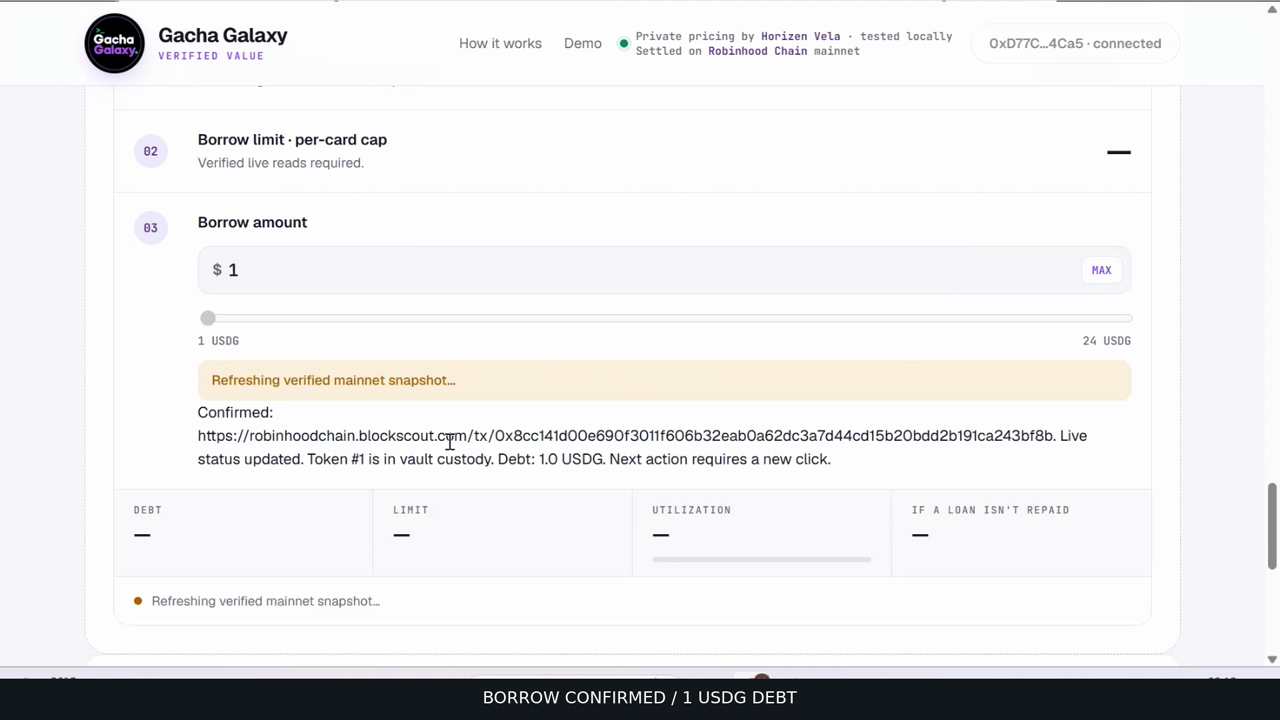
Gacha Galaxy publishes verifiable price certificates for graded trading cards and demonstrates NFT-backed USDG lending on Robinhood Chain. The pricing system uses marketplace asking-price evidence—not completed sales. For the PSA 10 Rayquaza VMAX #218, certificate 109308847, the published valuation is $2,900 with a fair range of approximately $2,587–$3,213. Six price certificates are published; only Rayquaza token #1 is enabled for lending. The mainnet pilot demonstrates NFT deposit, USDG borrowing, repayment and withdrawal. Actual borrowing is constrained by the configured per-card cap and available pool liquidity—not simply the certificate’s valuation. This is a small pilot, not audited production infrastructure. A price certificate does not establish physical authenticity, physical custody or legal ownership rights. NFT vault custody is separate from custody of the physical card.
Progressed from a Robinhood Chain testnet prototype to a small mainnet USDG lending pilot. Implemented direct NFT deposits, exact-amount repayment approvals, transaction receipt verification, read-only recovery and polling, and live debt and liquidity checks. Published six price certificates, with Rayquaza token #1 enabled for lending. Completed a mainnet deposit → borrow → repay → withdraw cycle, with zero debt and no active position confirmed afterward. Prepared the working frontend, narrated product demo and judge deck. Security audit, physical custody arrangements and legal rights remain unresolved.
Raised a seed round with Backed by Bora Ecosystem Fund, Binance/Tokocrypto, KakaoGames, Maven Capital, Marshland Digital Assets, Outlier Ventures and BlocTech.