
Artisan is a community task board that uses x402, ERC-7710, and Venice AI to assist organizers with task reviews and reward payouts via delegated on-chain transactions.
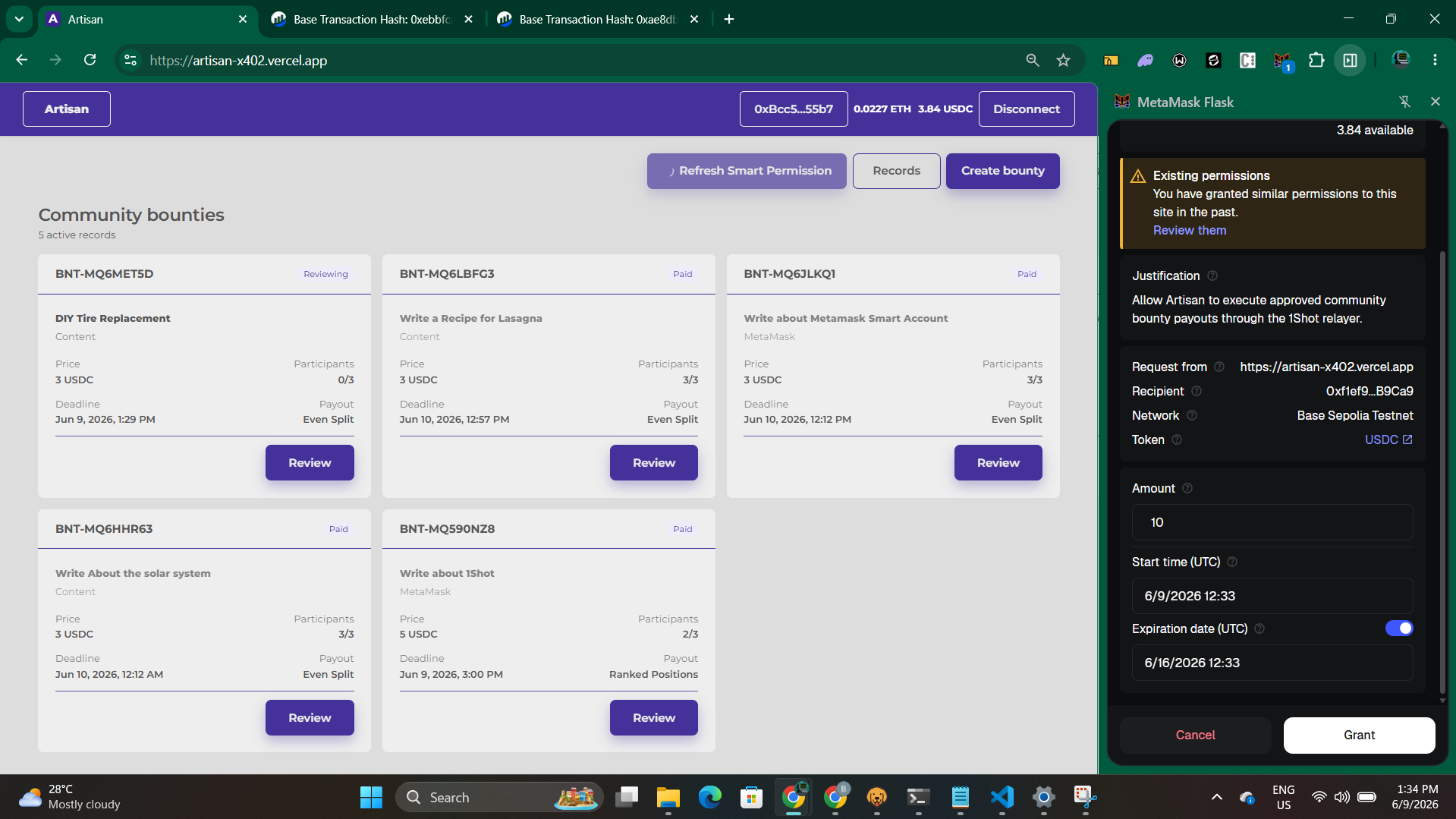
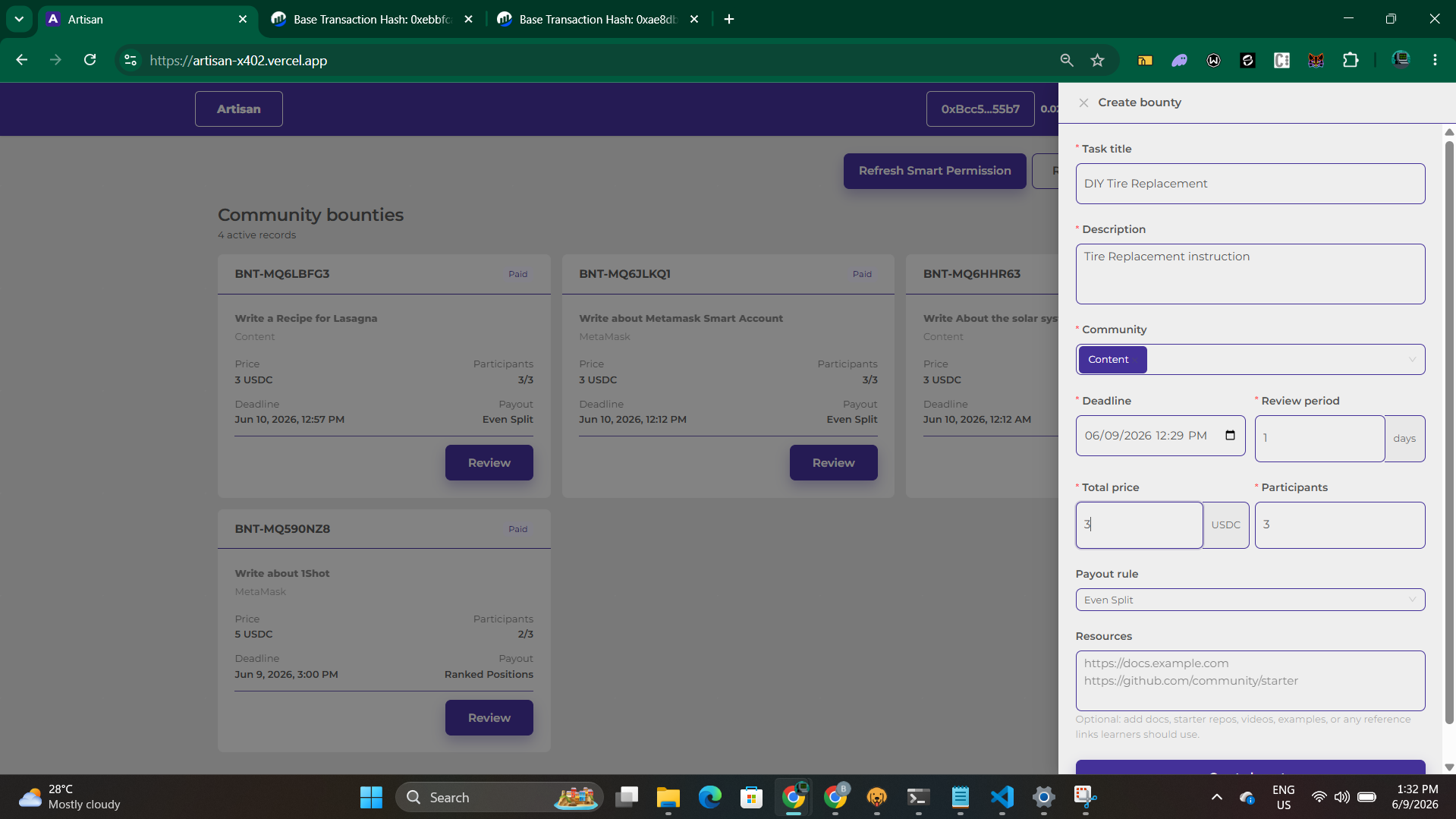
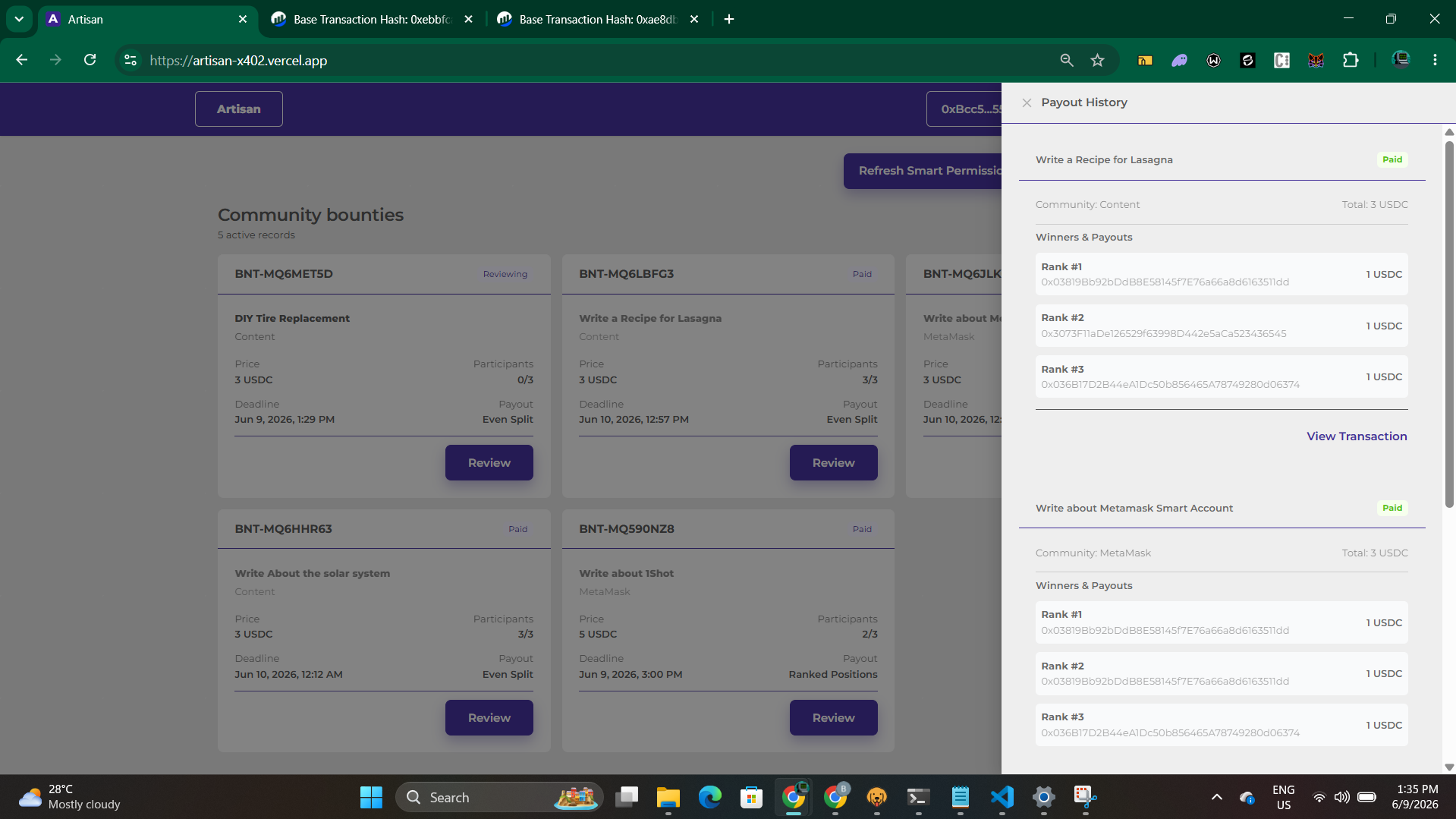
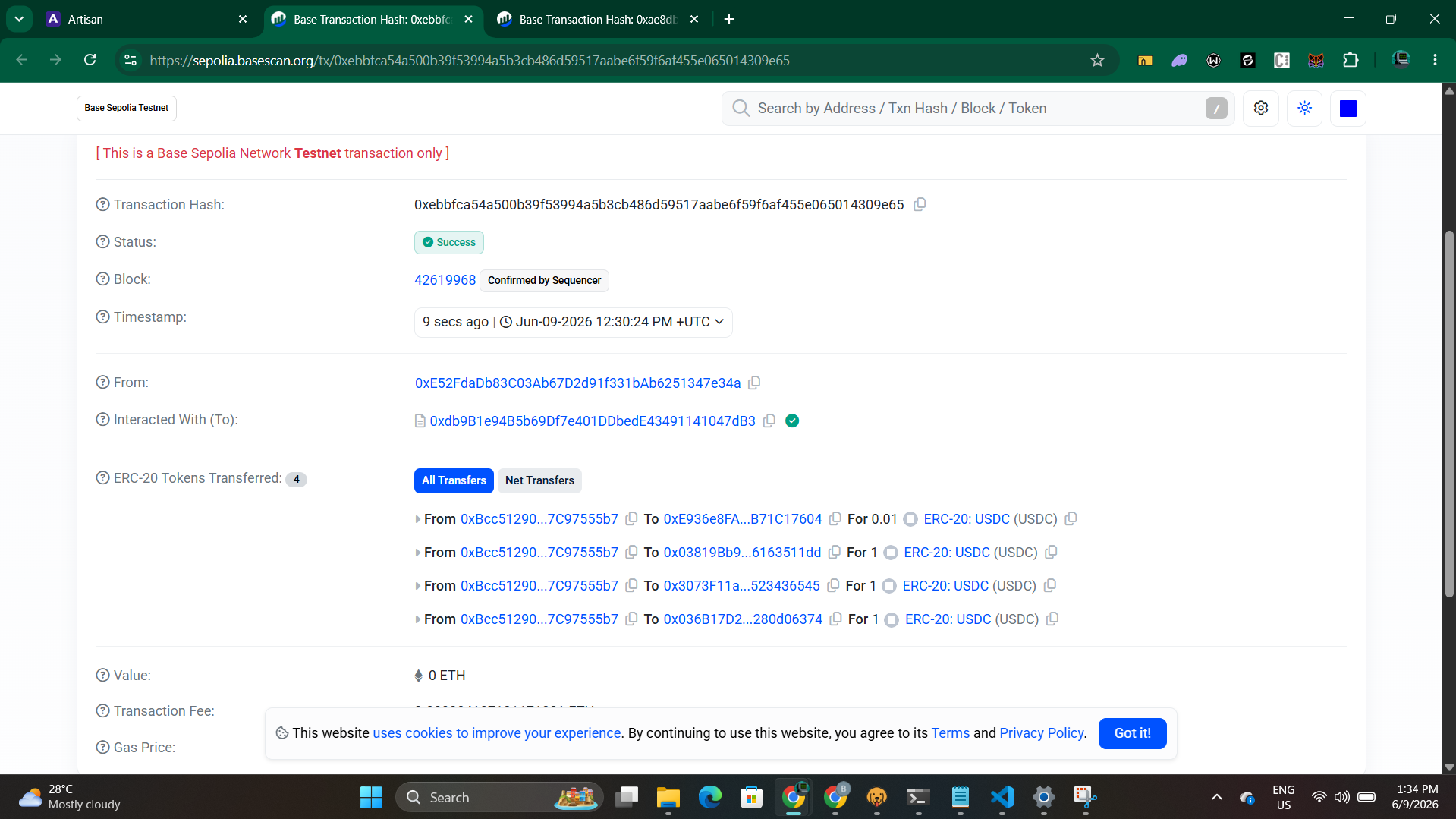
Artisan is a task board for learning communities. Organizers create tasks, learners submit proof of work, and the platform autonomously manages AI-supported reviews and reward payouts using delegated on-chain permissions.
Key Concepts & Technologies
Artisan integrates several tools to create a seamless, gasless experience for community managers.
x402 (Payment Required Protocol)
Artisan implements the x402 protocol to gate premium services such as AI reviews. When an organizer requests an AI review, the API returns a 402 Payment Required status. The platform then uses delegated permissions to settle this fee automatically, enabling a pay-as-you-go infrastructure for AI-powered workflows.
ERC-7715 (Advanced Permissions)
Using the MetaMask Smart Accounts Kit, Artisan requests Advanced Permissions from organizers. This creates a digital delegation that allows the platform to act on the organizer’s behalf within predefined limits. Once approved, Artisan can execute specific actions such as AI review payments and reward distributions without requiring the organizer to manually sign every transaction.
ERC-7710 (Delegated Execution)
ERC-7710 enables trusted relayers to execute transactions on behalf of users based on previously granted permissions. In Artisan, reward payouts are packaged as 7710 execution bundles, ensuring that approved actions are carried out securely and efficiently while preserving the user’s original intent.
1Shot API and Gas Abstraction
Artisan uses the 1Shot Permissionless Relayer on the Base Sepolia testnet to remove the need for organizers to hold ETH for gas fees.
Instead of paying gas in ETH, organizers pay a small fee in USDC. The 1Shot relayer redeems the delegated permissions on-chain, covers the required ETH gas costs, and receives the USDC fee in return. This creates a seamless experience where users interact with the platform using a single stablecoin, making the application feel as simple and intuitive as a traditional Web2 product.
5. Venice AI (Structured Agentic Reviews)
Artisan leverages Venice AI to provide autonomous, objective evaluations of learner submissions by assisting the organizers in review . Using the venice-uncensored model, the platform generates structured JSON reviews that include scores, summaries, and recommendations. This ensures that bounty reviews are consistent, instant, and high-integrity, allowing the platform to autonomously trigger reward payouts once the AI-generated criteria are met.
The implementation of Advanced Permissions is a paradigm shift for Web3 UX. It allowed our platform to transition from a "Wallet-Centric" app to an "Agentic" app, where the software can finally act on the user's behalf without constant interruptions. The security model (scoping permissions to specific assets/amounts) is perfectly balanced. To further enhance this, future SDK versions could include helpers to map 7715 contexts directly to 7710 execution formats and provide more granular spending limit templates in the MetaMask UI (e.g., "Allow up to 5 AI reviews").
1Shot's "Permissionless Relayer" approach is the most seamless way to implement gas abstraction. The relayer_send7710Transaction endpoint is highly intuitive. A valuable addition would be a "Fee Lock" or a longer TTL for quoted fees from relayer_getFeeData to improve the success rate of complex, multi-step agentic transactions during high network volatility.
The x402 protocol is the cleanest way we've found to handle "Agentic Discovery." By returning a 402 status with structured payment metadata, our frontend was able to dynamically handle payments for various services without hardcoding prices. It turns the API into a self-documenting marketplace. We believe the ecosystem would benefit from standardized client-side interceptors that can automatically detect a 402, parse the metadata, and trigger the payment flow.
The Inference Speed and strict adherence to system prompts (especially for JSON output) are outstanding. The venice-uncensored model followed our complex review rubric perfectly and never failed to return a valid JSON object, which is critical for autonomous backend processing. Expanding the documentation for venice_parameters with more examples for structured data extraction would make it even more accessible for constrained workflows.
https://x.com/jhamiyou/status/2064502373595160811?s=46
https://x.com/jhamiyou/status/2065106960467276151?s=46
1. The Core Objective (The "Why")
Our goal was to solve the friction in community bounty management: the manual effort of reviewing submissions and the gas hurdles for
learners getting paid. We built Artisan, an AI-automated bounty board that uses delegated smart accounts for gasless payouts.
2. Technical Milestones (The "What")
You can list these specific features that are currently implemented in your code:
AI-Powered Automated Review Pipeline: Developed a system that uses Venice AI(structured outputs) to automatically score submissions, generate summaries, and provide recommendations (Approve/Revise/Reject).
Monetized AI via x402: Implemented a 402 Payment Required gate where admins pay a small fee (via ERC-7710) to trigger the AI review
Gasless Disbursement (1Shot + ERC-7710): Integrated the 1Shot relay service on the Base Sepolia testnet and ERC-7710 (Delegated Transfers) so that winners receive payouts without needing native gas or complex wallet signatures.
We are Open to Fundrasing but we have non at the moment.